Podcast: Play in new window | Download (Duration: 44:49 — 33.3MB) | Embed
Subscribe to the Healthcare Beans Podcast: Apple Podcasts | Spotify | RSS | Subscribe via..
Neurorehabilitation has a capacity problem. The number of patients who could benefit from intensive therapy exceeds the workforce and facility capacity available to deliver it.
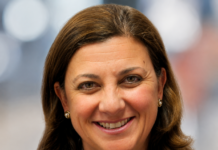
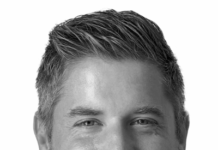
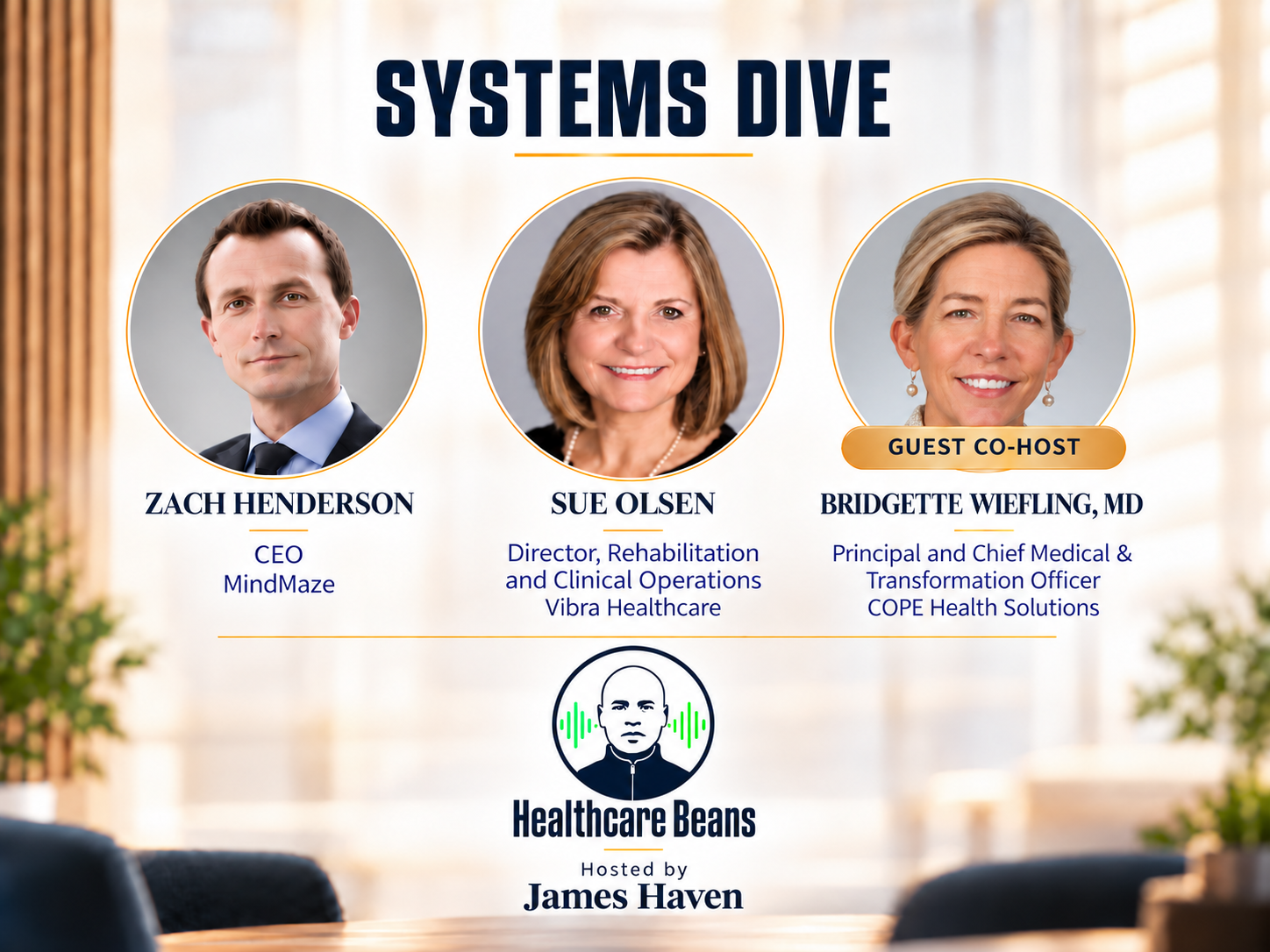
In this Healthcare Beans Systems Dive, James Haven brings together Zach Henderson, CEO of MindMaze; Sue Olsen, Director of Rehabilitation and Clinical Operations at Vibra Healthcare; and guest co-host Bridgette Wiefling, MD, Principal and Chief Medical and Transformation Officer at COPE Health Solutions, to examine what it actually takes to scale neurorehabilitation.
The conversation starts with clinical capacity and therapeutic intensity, then moves into the harder systems questions: hospital and payer economics, reimbursement, evidence, patient adoption, rural access, procurement, workflow, implementation friction, and whether an innovation continues to be used after the pilot ends.
Clinical efficacy may be necessary for healthcare innovation — but what else has to be true for an intervention to become durable, scalable infrastructure?
Godspeed! ~James
Episode Timeline
00:00 — The neurorehabilitation capacity problem
Zach describes the mismatch between the growing population of patients with neurological conditions and the therapist and facility capacity available to serve them.
03:30 — Why the traditional therapy model struggles to scale
The panel discusses the one-patient/one-therapist model, population aging, workforce constraints and the importance of therapeutic intensity and repetition.
08:10 — The neuroplastic window and the cost of inadequate capacity
Why patients recovering from stroke may have a limited period in which intensive rehabilitation can have its greatest effect — and what happens when capacity isn’t available.
11:00 — Extending rehabilitation from inpatient care into the home
Sue explains the challenge of maintaining rehabilitation intensity after discharge and the attempt to create a continuum across inpatient, outpatient and home-based care.
13:40 — Building the economic case
Bridgette asks the question every healthcare administrator eventually faces: where does the return on investment actually come from?
17:35 — Clinical ROI versus financial ROI
Sue describes the clinical and operational outcomes Vibra wanted to evaluate, while Bridgette pushes on how those benefits translate into a CFO-level business case.
22:30 — Payers, reimbursement and evidence
The conversation shifts to health-plan incentives, home-based treatment, workers’ compensation and the evidence required to support broader adoption.
27:00 — Patient adoption and engagement
Sue shares an example of how immersive rehabilitation technology changed one patient’s experience of therapy and discusses adoption in the home.
30:00 — Rural healthcare and keeping rehabilitation closer to home
The panel considers rural access, the VA, Critical Access Hospital swing beds and whether technology could support more rehabilitation outside large tertiary centers.
31:45 — Could patients pay directly?
Zach discusses the possibility of direct payment using HSA/FSA funds as another way of reducing access friction while maintaining clinician involvement.
36:50 — Where are the headwinds?
Reimbursement, procurement, cybersecurity, workflow, organizational change and the challenge of creating a purchasing pathway for something new.
39:50 — The hidden importance of logistics
Sue explains why implementation problems like equipment movement, setup, support and missing components can determine whether clinicians actually use a technology.
41:55 — Designing friction out of the product
MindMaze’s therapy integration managers and product simplification efforts illustrate how operational feedback can reshape the product itself.
43:10 — Did it survive the pilot?
After Vibra’s formal quality-improvement program ended, clinicians continued using the model. The episode closes on perhaps the most important test of implementation: whether a change persists after the formal initiative disappears.